
Periodontal treatment
Periodontal treatment.
Care for the gum and bone tissues that support the teeth: from deep cleanings for early gum inflammation to advanced therapy for established periodontal disease.
Why periodontal care matters
The gums and bone surrounding the teeth are the foundation everything else sits on. Untreated gum disease, at any stage, gradually erodes that foundation, with consequences that extend well beyond the visible gumline. Periodontal care is the work of keeping the foundation sound.
The earliest stage, gingivitis, presents as bleeding gums and inflammation. Caught here, it is generally reversible with professional treatment and consistent home care. Left untreated, it can progress into periodontitis: a slower, more serious condition that affects the bone supporting the teeth and requires more involved therapy.
What to expect
Treatment depends on the stage. Early-stage cases are typically managed with deep cleanings (scaling and root planing) that remove hardened bacteria from below the gumline, paired with refinement of home care technique.
More advanced cases may involve antimicrobial therapy, more frequent maintenance cleanings, or in some cases referral to a periodontist for surgical intervention. Throughout, Dr. Lina explains what is happening, what the options are, and what each one involves before any work proceeds.
For patients with stable periodontal disease, ongoing maintenance (typically three- or four-month cleaning intervals rather than the standard six) keeps the condition controlled long-term.
When periodontal treatment is a good fit
Periodontal treatment is appropriate for any patient with signs of gum inflammation or disease, and as preventive maintenance for patients with a history of periodontal issues. Untreated, gum disease is one of the leading causes of tooth loss in adults, and one of the most preventable.
Dr. Lina assesses gum health at every routine visit and addresses early signs before they become larger problems.
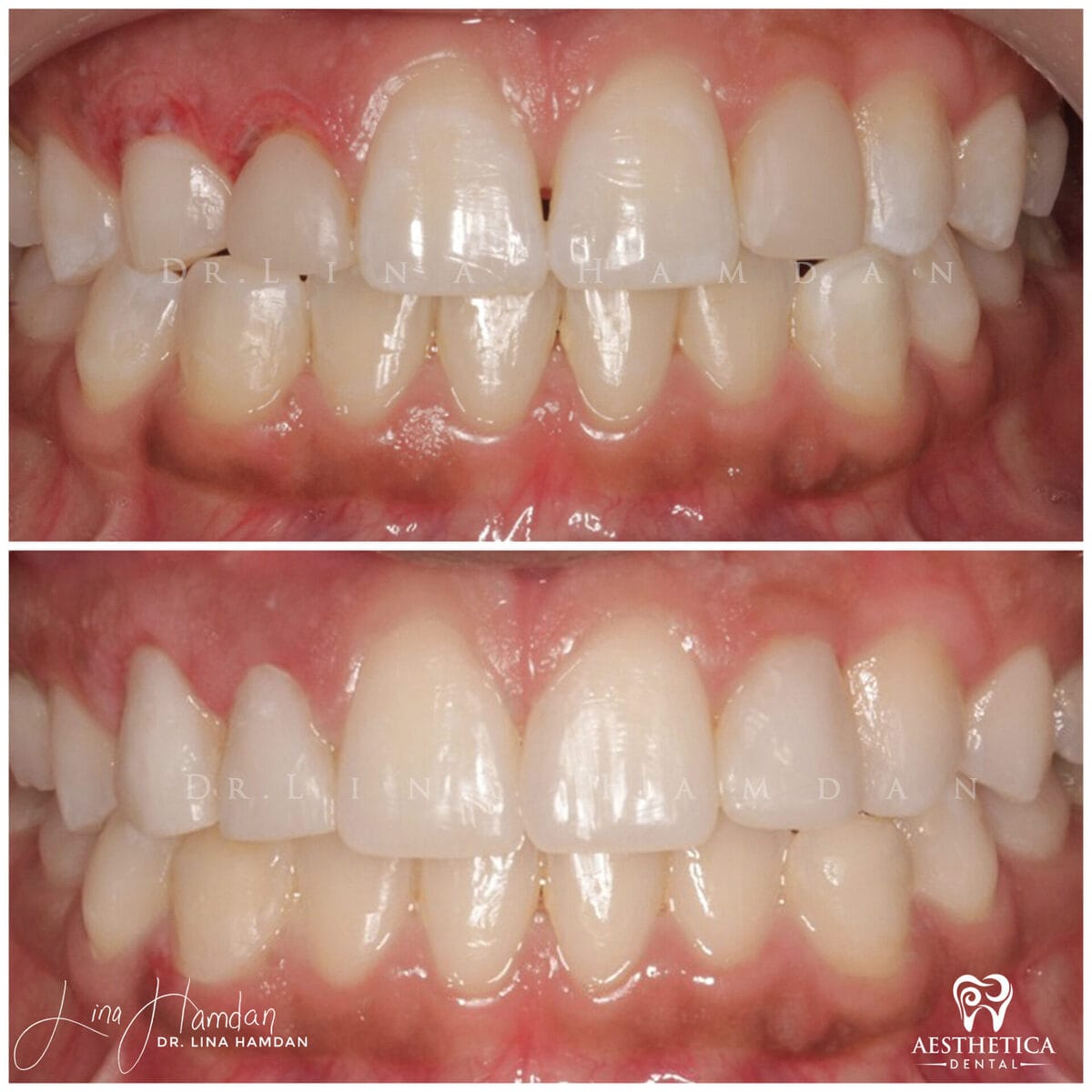
Recent results
Cases from the practice.
Real before-and-after photos from patients in Dr. Hamdan's care.

Questions
Frequently asked.
How do I know if I have gum disease?
Common signs include gums that bleed when you brush or floss, persistent bad breath, gum recession, and teeth that feel loose or shifted. Many cases are detected first by your dentist or hygienist at a routine exam.
What is a deep cleaning?
A deep cleaning (scaling and root planing) removes hardened plaque and bacteria from below the gumline that a routine cleaning cannot reach. It is the standard first-line treatment for early-stage periodontal disease.
Is gum disease reversible?
The earliest stage (gingivitis) is generally reversible with professional treatment and good home care. More advanced periodontitis can be controlled and stabilized but rarely fully reversed; ongoing maintenance becomes the long-term plan.
Related services
Also explore
- [PHOTO_SERVICE_EXAMS_CLEANINGS_PLACEHOLDER]
Exams and cleanings
Exams and cleanings.
- [PHOTO_SERVICE_GUM_DEPIGMENTATION_PLACEHOLDER]
Gum depigmentation
An even, healthy gumline.